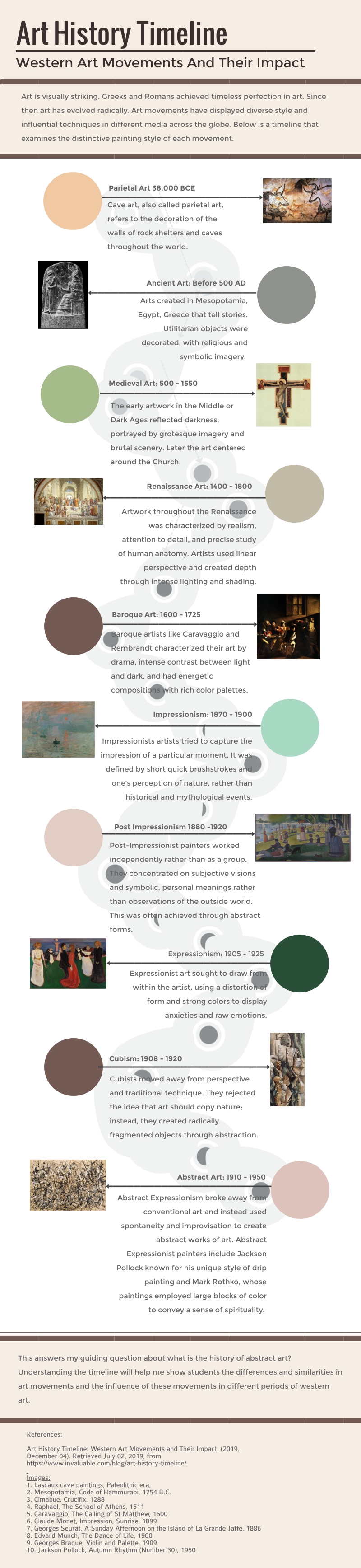
Reference
Art History Timeline: Western Art Movements and Their Impact. (2019, April 12). Retrieved July 02, 2019, from https://www.invaluable.com/blog/art-history-timeline/
This is your brain on art: A neuroscientist’s lessons on why abstract art makes our brains hurt so good
Eric Kandel, a winner of the 2000 Nobel Prize for Physiology or Medicine, offers insights from his study of the human brain to explain why abstract art is difficult to understand. The human brain is programmed to process things through bottom-up thinking due to centuries of conditioning. On the other hand, top-down thinking is based on personal experience and knowledge, which is not ingrained in us. Abstract art taps bottom-up thinking that require no prior knowledge. However, this bottom-up thinking is not automatic or programmed into us. Our brain has to work harder to uncover the clues to discover the essence of the painting.
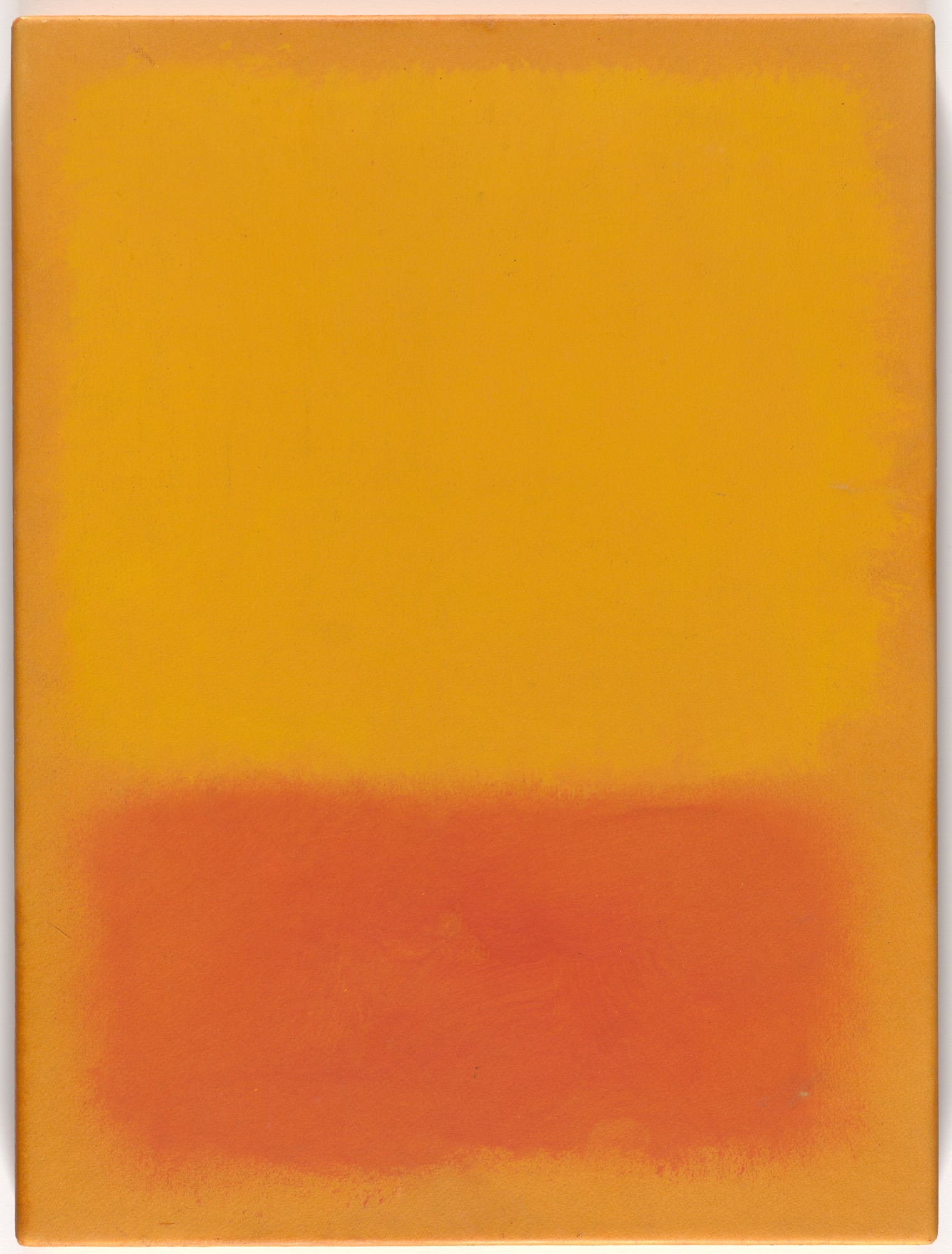
Orange and Yellow3, 1956 by Mark Rothko 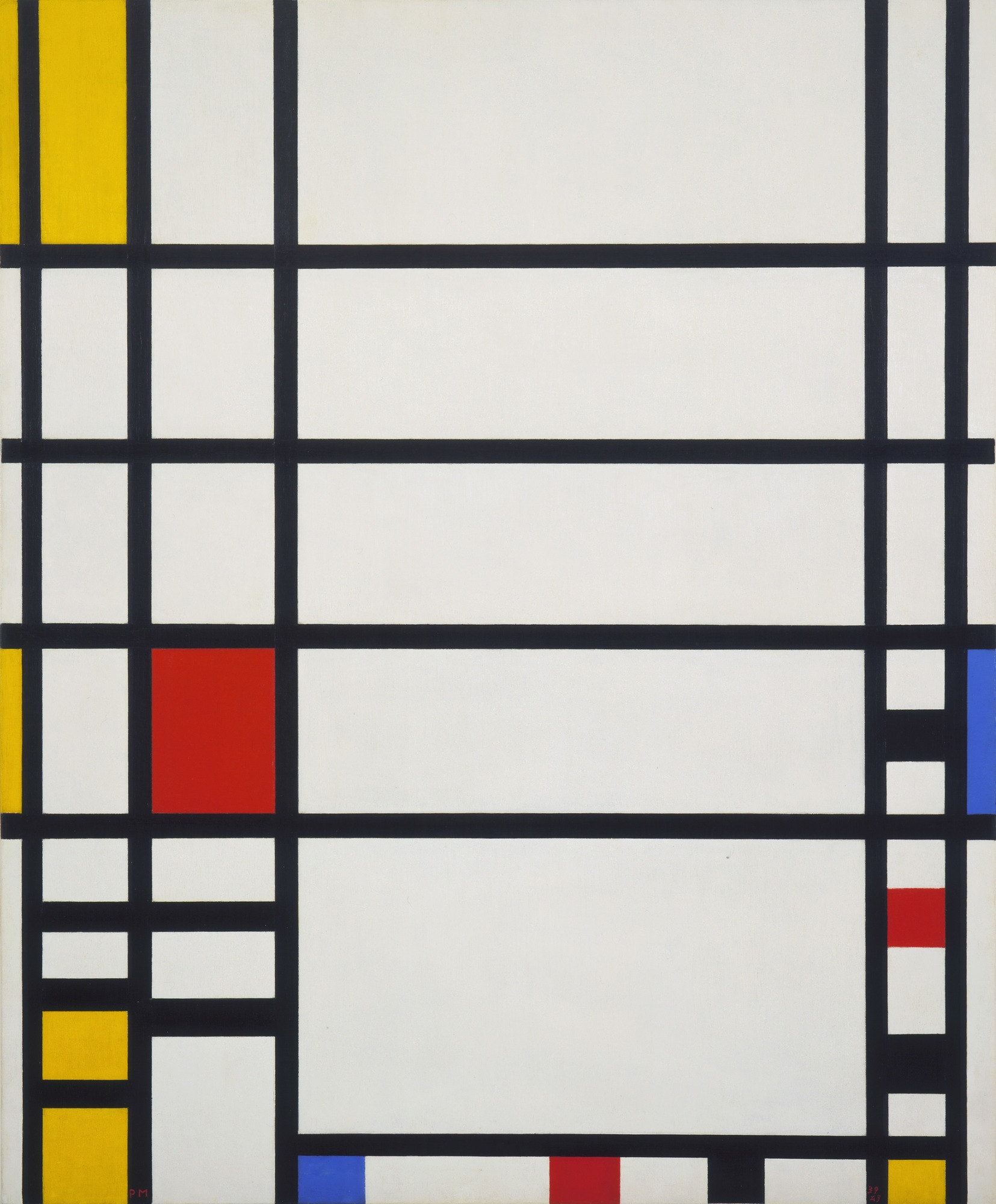
Composition in Red, Blue, and Yellow, 1937 by Piet Mondrian 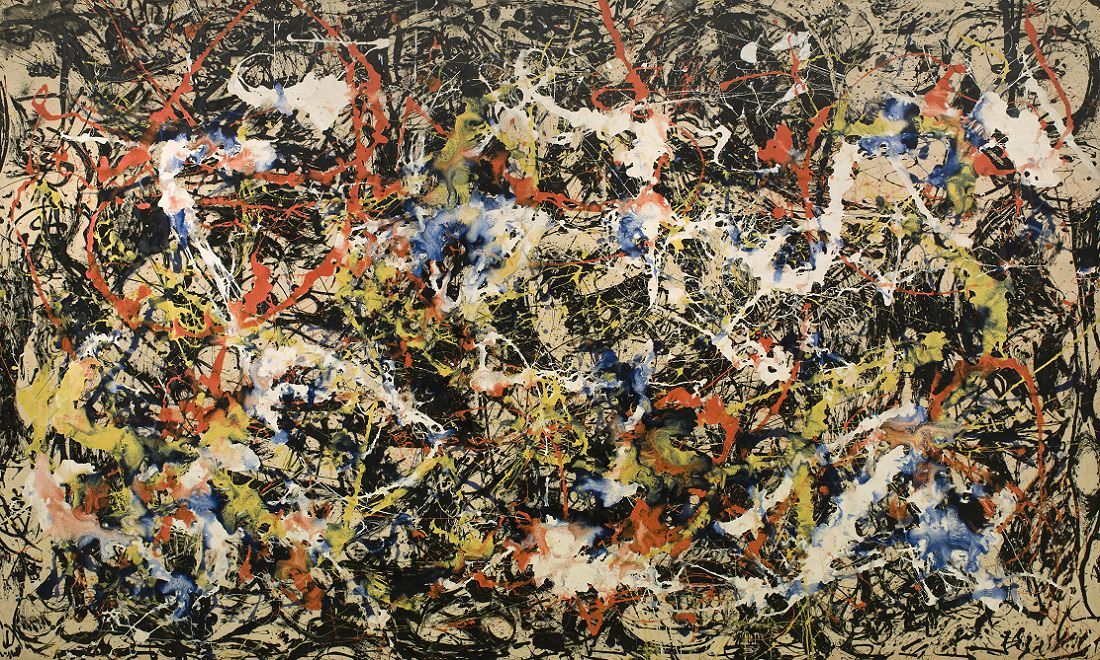
Convergence, 1952 by Jackson Pollock
Kandel explains that this is an example of reductionism which scientists use to reduce complex phenomena into a simple component which they can study deeply. He points out that artists also use reductionism, “to take a complex problem and select a central, but limited, component that you can study in depth: Rothko—only color. And yet the power it conveys is fantastic. Jackson Pollock got rid of all form.”
This article clarified my query: what is abstract art? I understood why people find abstract art intimidating and it also helped me to recognize that we need to broaden our perspective, which forces us to see and think differently.
Reference
Charney, N. (2016, December 19). This is your brain on art: A neuroscientist’s lessons on why abstract art makes our brains hurt so good. Retrieved June 26, 2019, from https://www.salon.com/2016/12/18/this-is-your-brain-on-art-a-neuroscientists-lessons-on-why-abstract-art-makes-our-brains-hurt-so-good/
What Is Balance In Art And Why Does It Matter?
How is balance achieved in Art? Balance is achieved through the elements of art (line, shape, color, value, space, form, texture). The relationship between these elements is accomplished in a composition through visual weight and equilibrium.
In three dimensions, balance is guided by gravity. In two-dimension, the artist relies on the visual weight of elements of the composition to figure out whether the piece is balanced or not. Sculptors use both physical and visual weight to detect the balance. We as humans seek out balance because we are bilaterally symmetrical. We have a natural desire to seek balance and equilibrium. Artists usually strive for balance in their artwork. Balanced artwork helps the viewer feel comfortable and it is pleasing to the eye. On the other hand, an unbalanced artwork appears unstable, creates tension, and makes the viewer uneasy. Sometimes, the artists create unbalanced artwork deliberately.
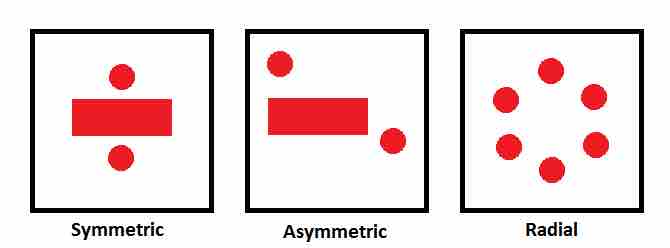
There are three different types of balance: symmetrical, asymmetrical, and radial. Symmetrical balance is achieved when the elements are arranged around a central axis. The axis may be vertical or horizontal, e.g., Leonardo da Vinci’s The Last Supper is balanced across a horizontal axis. Radial symmetry is achieved when the elements are organized around a central point. Radial symmetry has a strong focal point, e.g., spokes of a wheel. In asymmetrical balance, two sides of a composition are not the same but appear to have equal visual weight, e.g., negative and positive shapes in the artwork.
When creating artwork, elements of art influence balance through visual weight to create visual equilibrium. “Balance is an essential principle of design as it communicates the overall effect of the art, which in turn makes the composition dynamic and lively, or restful and calm” (Shelly, 2019).
This website clearly answers my guiding question: what are the elements of art? I have learned how to achieve balance through elements of art as well as the importance of balance in a composition. Both of these are important components in teaching art to students.
Reference
Esaak, Shelley. (2019, May 23). What Is Balance in Art and Why Does It Matter? Retrieved from https://www.thoughtco.com/definition-of-balance-in-art-182423
Form upon form, colour upon colour: How Patrick Heron helped make Cornwall the heart of British abstract art
Patrick Heron was a British abstract artist. In addition to painting he was also a prolific writer on art. His belief was that color and space should be the primary concern of the artist. The early 20th-century French artist heavily influenced him. As a critique, he also introduced American Abstract artist to the British audience: the scale of the paintings, the rhythm, the palette and the insistence that each part of the canvas was as crucial as every other, had a profound effect on him. He believed that painting was thinking with one’s hand, arm, or even the whole body.

Patrick believed that “a picture is not the vehicle of the meaning, the picture is the meaning.” That is why he needed abstraction so that the viewer would focus on the painting rather than what the painting was about. Even though he stayed away from realism, the sense of real objects is still powerfully transmitted in his paintings. His paintings contained the residue of natural forms, e.g., the Azalea Garden: May 1956 refers to the play of broken light on his flower beds in his own garden at Eagle’s Nest.
Patrick went through phases evolving from a figurative to an abstract artist. As a figurative artist, he sought to convey abstract patterns underlying real appearances. And as an abstract expressionist, his paintings conveyed the sense of real objects.
This periodical answers my question: what is abstract art? I learned that as one compares paintings from the same artist at different time periods one can see that the style of a painter is not fixed; each painter undergoes significant changes in their style throughout their life.
Reference
How Patrick Heron made Cornwall the heart of British abstract art. (2018). Retrieved June 30, 2019, from https://www.newstatesman.com/culture/art-design/2018/05/how-patrick-heron-made-cornwall-heart-british-abstract-art
Featured Image: Bhansali, V. Museum of New Zealand Te Papa Tongarewa 2019. Photograph. Wellington, New Zealand.
 An Art Infused Education
