Jackson Pollock – Anderson Collection At Stanford University
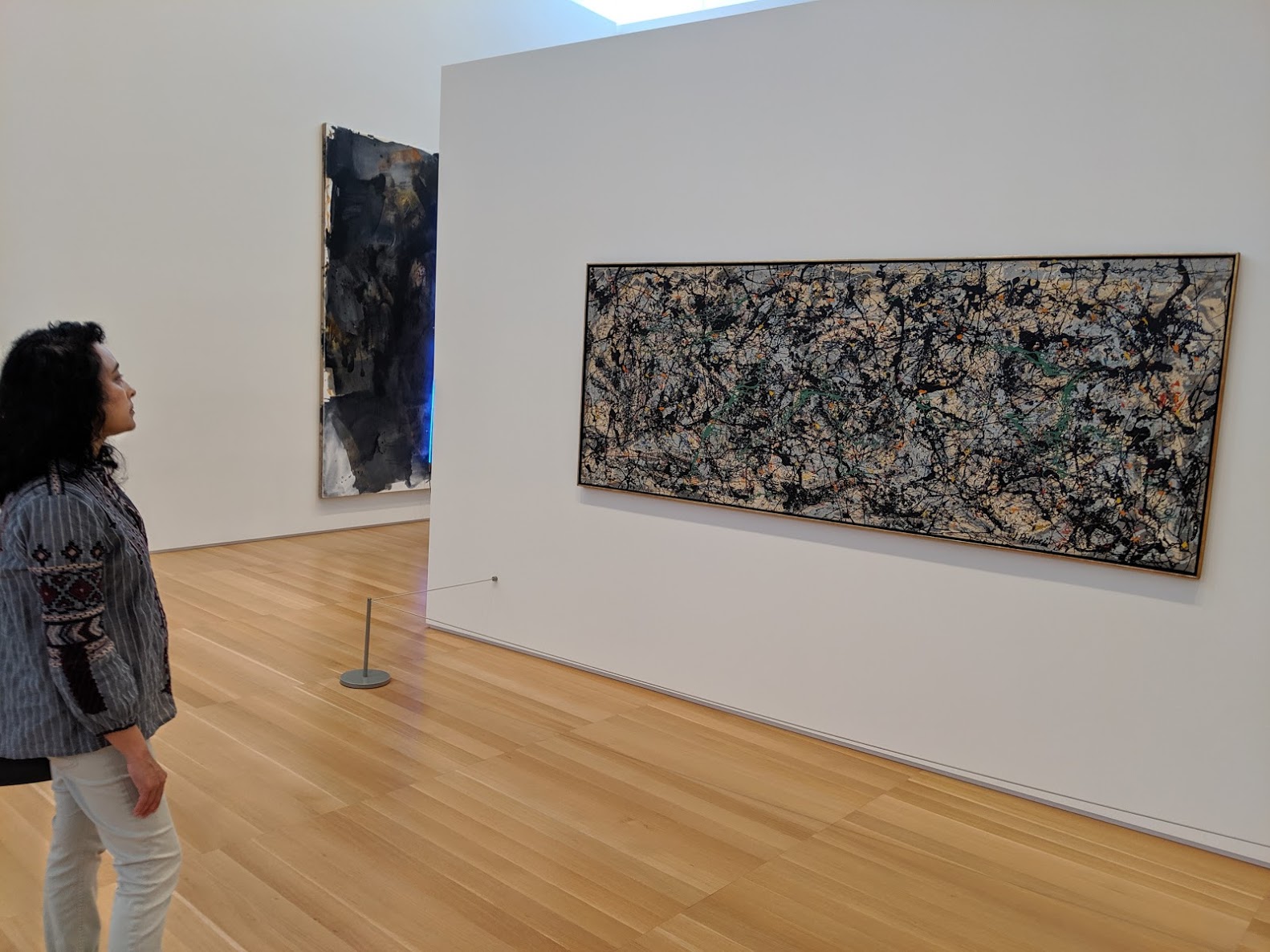
As I enter the Anderson Museum, there is a sense of excitement, energy, and elation. In this quiet, serene room, Jackson Pollock’s Lucifer, stands out because there are no brush strokes; instead, you can see the drip, spread, and oozing of the paint across the canvas. According to Pollock, “The painting has a life of its own. I try to let it come through.”
As you keep staring at the painting, it is hard for you not to imagine your own body leaping, dancing, straddling, and juggling around the canvas. This vigor is what sets Pollock’s painting apart from other paintings in the museum.
Movement in the painting jumps out while you look at the painting from side to side. Interestingly, it is your eye and body which is moving as you take in the full expanse of the picture. As you try to dig into the picture, it is hard to figure out where one line starts and stops, or which layer is on top of another, or where the blurry areas of paint get disrupted. The other aspect which stands out is the different kinds of paints that are used–in this case, oil, aluminum paint, and enamel. Pollock’s painting was not planned because he believed in action art or performance art.
I have visited many museums, but this experience was very engaging. Having the content knowledge to understand Pollock’s concept behind his painting was very exhilarating and helped analyze my guiding question: what is abstract art? From this, I learned that students should have experiential learning; this helps them connect and reflect on the artist and his work.
Reference
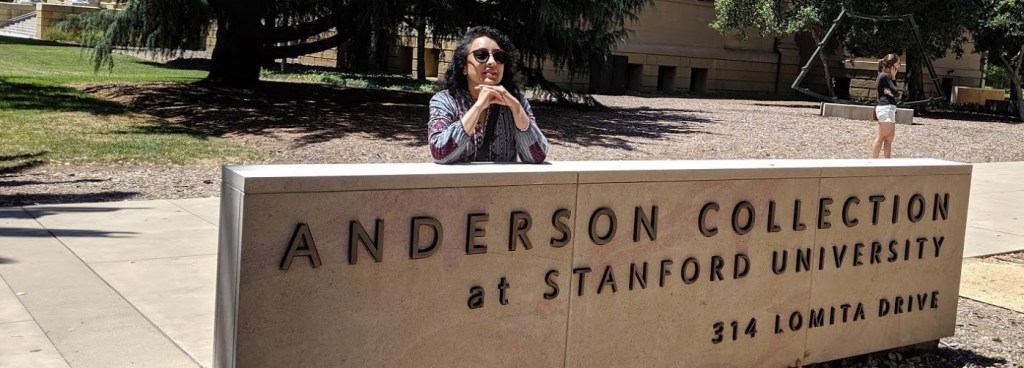
Bhansali, S. Anderson Collection At Stanford University. 2019. Photograph. Anderson Collection at Stanford University, Stanford, CA.
Featured Image: Anderson Collection Building. 2014. Website. Stanford, California.
 An Art Infused Education